
Prime Minister Narendra Modi lauded India's 7.8 per cent GDP growth, achieved despite global conflicts and instability. He emphasised the importance of Swadeshi and self-reliance for a developed India by its 100th year of Independence, urging citizens to avoid unnecessary foreign expenditures.

India's Chief Economic Advisor V Anantha Nageswaran stated that the country's balance of payments (BoP) pressure is expected to remain a continuous challenge due to rising imports, commodity dependence, high global interest rates, and intense competition for capital.
State Bank of India's latest report highlights a 'chalk and cheese' divide in the Reserve Bank of India's recent policy communications, with the Monetary Policy Committee minutes showing a hawkish tone while the Governor's statements are more data-dependent, leading to market uncertainty regarding future interest rate hikes.

Finance Minister Nirmala Sitharaman has called upon Indian industry to prioritise not just scale but also resilience, better governance, and deeper technological capabilities to achieve the 'Viksit Bharat' goal by 2047.

The highlight of the successful BRICS Summit was its ability to deliver a joint statement that all members, including Iran and the United Arab Emirates, embroiled in the war in West Asia, signed.

East Zone were crowned Duleep Trophy champions after the final against South Zone ended in a draw in Chennai, with their first-innings lead proving decisive.

India has become a significant supplier of gasoline to Russia, with Indian refiners providing 1 million barrels in the last two months, as Ukrainian drone attacks severely disrupt Russia's domestic fuel production.
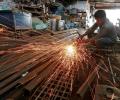
India's manufacturing sector activity reached a three-month high in May, with the HSBC India Manufacturing Purchasing Managers' Index (PMI) rising to 55.0, driven by robust domestic demand, infrastructure projects, and new business gains despite ongoing inflationary pressures.

Tilak Varma, despite his white-ball success, expresses a strong desire to play Test cricket for India, considering red-ball cricket his true strength. He discusses the challenges of balancing international white-ball commitments with domestic red-ball opportunities and his eagerness to participate in the Duleep Trophy final amidst a tight schedule.
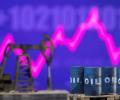
'If crude remains above $100 per barrel, with restricted retail-price increases, OMCs could face negative petrol and diesel marketing margins, higher LPG under-recoveries, higher crude-landing, freight and insurance costs, working capital and debt accumulation and inventory losses if crude subsequently corrects sharply.'

Foreign Portfolio Investors (FPIs) withdrew Rs 13,138 crore from Indian equities in the first half of September, driven by heightened global uncertainty, rising crude oil prices, firm US bond yields, and a strong dollar, impacting risk appetite.

Finance Minister Nirmala Sitharaman stated that India is likely to sustain economic growth of 7 per cent or more in 2026-27, continuing the pace recorded since the Covid-19 pandemic, despite geopolitical uncertainties and supply-chain disruptions.

A new report by Motilal Oswal Financial Services Ltd (MOFSL) indicates that inflation, interest rates, and monetary policy have become more significant drivers of gold prices than traditional geopolitical conflicts, with markets increasingly focusing on these economic factors.

New photographic evidence and a Pentagon inspector general's report confirm extensive damage to US military installations across the Middle East due to Iranian missile and drone strikes. The report details billions in financial costs, structural losses to hundreds of buildings, and damage to dozens of aircraft, contradicting previous assertions about US military readiness and ordnance stockpiles. The conflict also led to disruptions in the Strait of Hormuz, impacting global oil prices.

Analysts predict that the Reserve Bank of India's interest rate decision, the evolving situation in West Asia involving the US-Iran conflict, and crude oil prices will be the primary factors influencing investor sentiment in the Indian stock market this week.

Indian stock markets, including the Sensex and Nifty, experienced a significant tumble in early trade, driven by escalating tensions in West Asia that pushed crude oil prices close to the USD 100-per-barrel mark, alongside selling in IT stocks and fresh foreign fund outflows.

Reliance Industries Ltd (RIL) has expressed caution regarding 'extreme volatility' risks stemming from the West Asian conflict, which could impact global oil demand and the company's margins, while also noting that near-term retail consumption demand may remain sensitive to macro conditions. Chairman Mukesh Ambani, in the annual report, remained silent on the timeline for Jio Platforms' anticipated public listing, stating the group will 'continue to evaluate strategic pathways'.

A 30-year-old man in Thane district, Maharashtra, allegedly committed suicide after a domestic quarrel. He locked his wife and children in a room before hanging himself. Neighbours found him and rushed him to the hospital, where he was declared dead.

The move is meant to enhance the operational capability of the armed forces, reduce import dependence and increase domestic value addition.

Prime Minister Narendra Modi has highlighted the risks posed by the 'weaponisation' of resources and strategic sea routes, urging India to achieve greater self-reliance in energy to mitigate vulnerabilities to overseas supplies and geopolitical tensions.

Of the 37,448 candidates registered for the Foreign Medical Graduate Examination (FMGE) in June, 36,288 appeared and 4,635 qualified.

The Reserve Bank of India has marginally increased its GDP forecast for the current fiscal to 6.7 per cent while slightly lowering the inflation projection to 5 per cent. The central bank noted that while domestic economic activity shows resilience, global turbulence, particularly re-escalating conflicts and volatile oil prices, continues to pose risks to the inflation outlook.

The Centre has spent 28 per cent of its FY27 capital expenditure budget of Rs 12.21 trillion in the first three months against around 24.5 per cent during the corresponding period a year ago.
India is significantly expanding its crude oil sourcing to Latin America, with Venezuela emerging as a major supplier, as geopolitical disruptions in the Middle East and the Strait of Hormuz compel the world's third-largest oil consumer to diversify its energy supplies.

Luxury hotels in Delhi are experiencing a significant room crunch and a sharp increase in tariffs ahead of the BRICS Summit. Many marquee properties show no availability or are quoting rates exceeding six figures per night around the September 12-13 event, highlighting a gap in India's hospitality infrastructure.

J R D Tata, chairman of the Tata group from 1938 to 1991, said that whenever he had to make a difficult decision, he would ask himself, what will be good for India, and what will be good for the Tatas. If he had a doubt, he would decide in favour of India. In the long run, it would turn out well for the Tatas too, he said, points out Arun Maira.

'India was the emirate's largest international source market by hotel guest volume.'

Gold and silver prices are anticipated to maintain a positive trajectory in the coming week, with market volatility expected to remain high due to ongoing developments in West Asia and upcoming global economic data, particularly the Federal Reserve's FOMC meeting minutes.

'India is trying to project that it can engage with the world in a different way too.'

The fiscal consolidation path and Rs 1 trillion stabilisation fund provide room to absorb mild shocks, but sustained oil-price increases pose risks.

Former Chief Economic Adviser Krishnamurthy V Subramanian outlines India's strategy to become a USD 55 trillion economy by 2047. The plan hinges on leveraging its young demographic in AI, dominating sunrise sectors like space and defence tech, attracting FDI, and achieving sustained 8% GDP growth.

Even if there is an early agreement on a cessation of hostilities in West Asia, the price shock will not go away easily, points out A K Bhattacharya.

FIFA President Gianni Infantino has strongly defended the recent World Cup, accusing critics of spreading 'hate and false narratives' and overlooking the tournament's success in promoting unity, safety, and inclusion.

The Reserve Bank of India (RBI) maintained its key policy rates for the fourth consecutive time, keeping the repo rate at 5.25 per cent, while the benchmark BSE Sensex closed 152 points higher in a volatile session, recovering from an intraday dip.

Chelsea is undergoing a significant close-season transformation under new manager Xabi Alonso, with major signings like Morgan Rogers.
Moody's Ratings has downgraded India's growth forecast for financial year 2026-27 (FY27) to 6 per cent from 6.8 per cent, attributing the revision to weaker consumption and industrial activity, elevated energy prices, and rising input costs stemming from the West Asia conflict.

Analysts predict that the US-Iran geopolitical conflict, upcoming quarterly earnings announcements, and fluctuations in crude oil prices will be the primary drivers of investor sentiment in the Indian equity markets.

The popularity of US President Donald Trump is waning with approval ratings at its lowest, according to former diplomat Mahesh Sachdev, who notes that with two-thirds of Americans not approving of a continuation of the war on Iran, Trump faces the risk of being impeached.

The conflict may disrupt Budget 2026-2027 projections, squeezing revenues and raising subsidies, prompting fiscal adjustments and potential reforms, echoing lessons from the Covid-era shock, points out A K Bhattacharya.

Bangladesh Cricket Board president Tamim Iqbal has indicated that India's upcoming cricket tour to Bangladesh, scheduled for September, might be postponed again. Discussions are ongoing between the BCB and BCCI, with the BCB president suggesting dates could be shifted due to a conflicting domestic tournament schedule and past strained relations between the boards.
